|
Getting your Trinity Audio player ready...
|
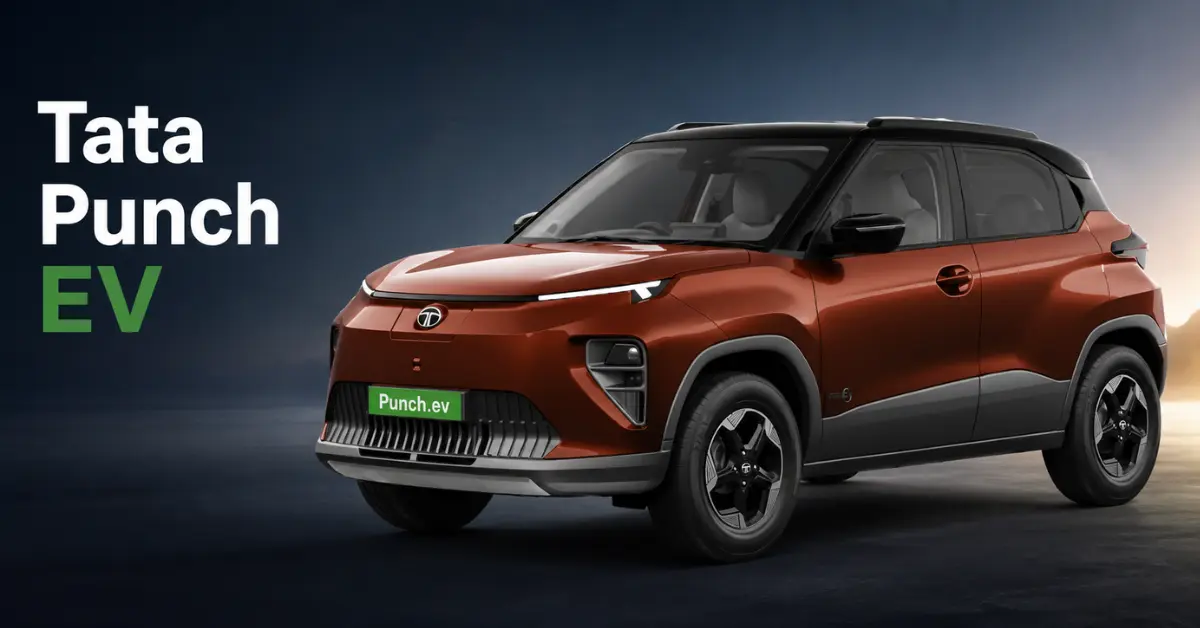
Tata Punch EV: The Tata Punch EV is suddenly becoming one of the most talked-about EVs in India again. And honestly, the reason is simple — people still cannot believe how Tata managed to price the base variant this aggressively.
At a time when most electric SUVs are crossing ₹15 lakh easily, the Tata Punch EV 2026 base variant is entering the market at a price that feels shockingly close to petrol SUV territory.
That is exactly why buyers are searching for one thing right now:
“How is the Punch EV base model so affordable?”
The Price Is Lower Than Many Expected
The updated Tata Punch EV now starts from around ₹9.69 lakh ex-showroom for the Smart 30 kWh variant.
But things become even more interesting with Tata’s Battery-as-a-Service (BaaS) option, where the entry price drops to nearly ₹6.49 lakh plus battery subscription charges.
And honestly, that changes the entire conversation around EV pricing in India.
Suddenly, an electric SUV starts looking financially possible for people who were originally planning to buy a petrol hatchback or compact SUV.
Read More: Tata Punch EV Official Price Details
Tata Punch EV Real On-Road Price in 2026
Here’s roughly what buyers are paying for the base Punch EV in major cities:
Delhi – Around ₹10.2 lakh
Mumbai – Around ₹10.8 lakh
Bangalore – Around ₹11.1 lakh
Chennai – Around ₹10.9 lakh
Hyderabad – Around ₹10.7 lakh
Prices vary depending on insurance and state EV benefits.
Read More: New Honda City facelift 2026 spotted at dealership.
So, How Did Tata Keep the Price This Low?
This is where Tata played smart.
Instead of focusing only on premium variants, the company clearly wanted an EV that feels accessible to normal Indian buyers.
A few key reasons help keep pricing aggressive:
- Smaller entry-level battery option
- Local manufacturing advantage
- Shared platform strategy
- Battery subscription option
- Feature balancing in base trims
But the biggest reason is simple — Tata wants EV adoption to grow fast.
And honestly, pricing is still the biggest weapon in India’s EV market.
Read More: Honda Hybrid sedan and SUV prototype debuts.
The Base Variant Still Looks Like a Proper SUV
This is another reason the Punch EV is getting attention.
Usually, affordable EVs look tiny or compromise heavily on styling. The Punch EV does not feel like that.
Even the base model still gets:
- Strong SUV stance
- High seating position
- LED lighting setup
- Good ground clearance
- Modern dashboard layout
That road presence matters a lot in India because buyers still want their car to “feel big” on the road.
And the Punch EV actually manages to do that.
Features Are Better Than People Expected
The Smart variant is obviously not loaded like the top model, but Tata still gives enough features to make it feel modern.
Depending on the variant, buyers get:
- Digital instrument display
- Touchscreen infotainment
- Automatic transmission
- Connected car features
- Fast charging support
Higher variants go much further with:
- 360-degree camera
- Ventilated seats
- Sunroof
- Dual 10.25-inch displays
But honestly, even the base trim feels usable enough for daily city driving.
Range Is Still Practical for Indian Cities
The updated Punch EV comes with 30 kWh and 40 kWh battery pack options.
The smaller battery focuses more on affordability, while the larger pack offers stronger range.
Expected real-world usage:
- Around 250–300 km comfortably for daily driving
- Fast charging support for easier long trips
For most Indian city buyers, that range is actually more than enough.
Why Buyers Are Suddenly Interested Again
The EV market in India is changing fast now.
Earlier, buyers mostly cared about:
- EV badge
- Range numbers
- Charging speed
Now people also care about:
- Affordability
- EMI
- Running cost
- Practicality
- Service support
And that is exactly where the Punch EV becomes strong.
It feels less like an expensive technology product and more like a normal SUV people can realistically own.
My Honest Take: Tata Punch EV
Honestly, Tata understood the Indian market better than most brands here.
Instead of making the Punch EV feel futuristic and unreachable, they made it feel practical and financially possible.
That is the real reason the base variant is getting attention.
Because for many buyers, this may finally be the first EV that does not feel “too expensive” anymore.
And if fuel prices continue rising, the Punch EV could easily become one of the most important budget electric SUVs in India over the next year.