|
Getting your Trinity Audio player ready...
|
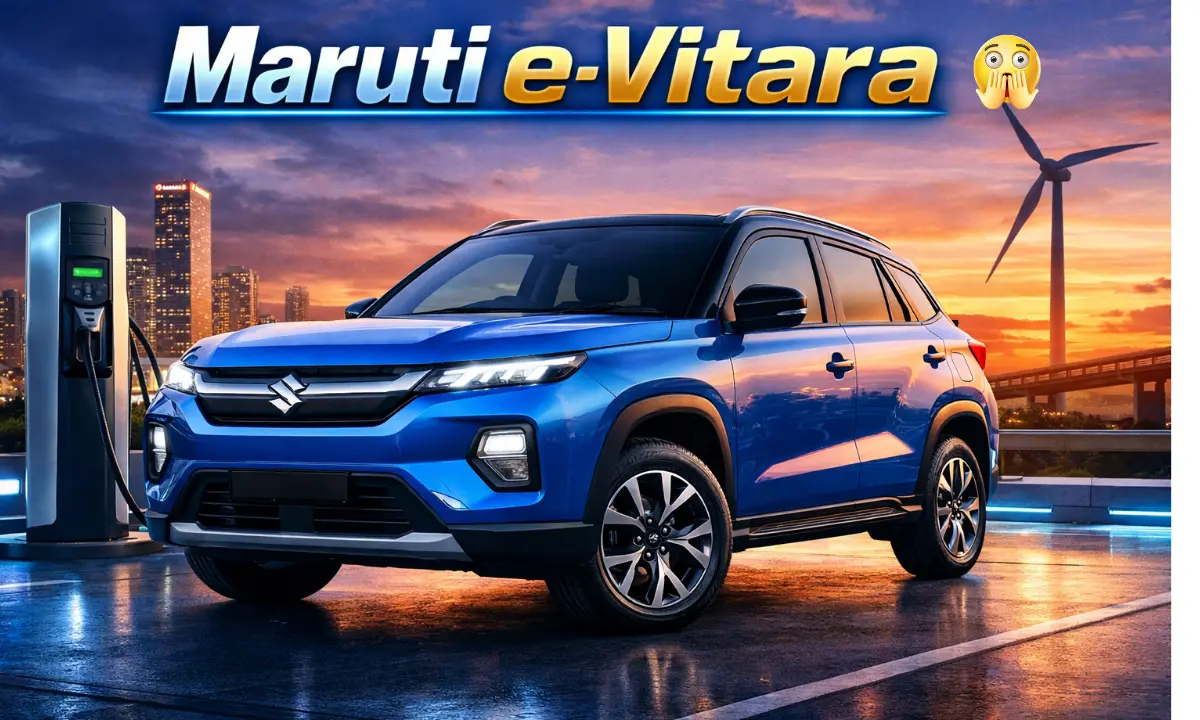
Maruti Suzuki’s entry into the electric SUV segment with the e-Vitara doesn’t feel like just another routine product launch to me. It feels like a strong, well-thought-out statement. After driving and reviewing Maruti cars for many years, one thing has become very clear to me: Maruti never rushes new technology in India.
I’ve consistently seen the brand take its time, carefully study the market, understand customer behaviour, and wait patiently for the right moment. Only after that does the company move forward with full confidence and a big decision. That’s exactly why the Maruti e-Vitara launch specs become so important for anyone planning to buy an electric vehicle in 2025 — it feels like Maruti is entering EVs only when it truly believes the timing is right.
What Exactly Is the Maruti e-Vitara?
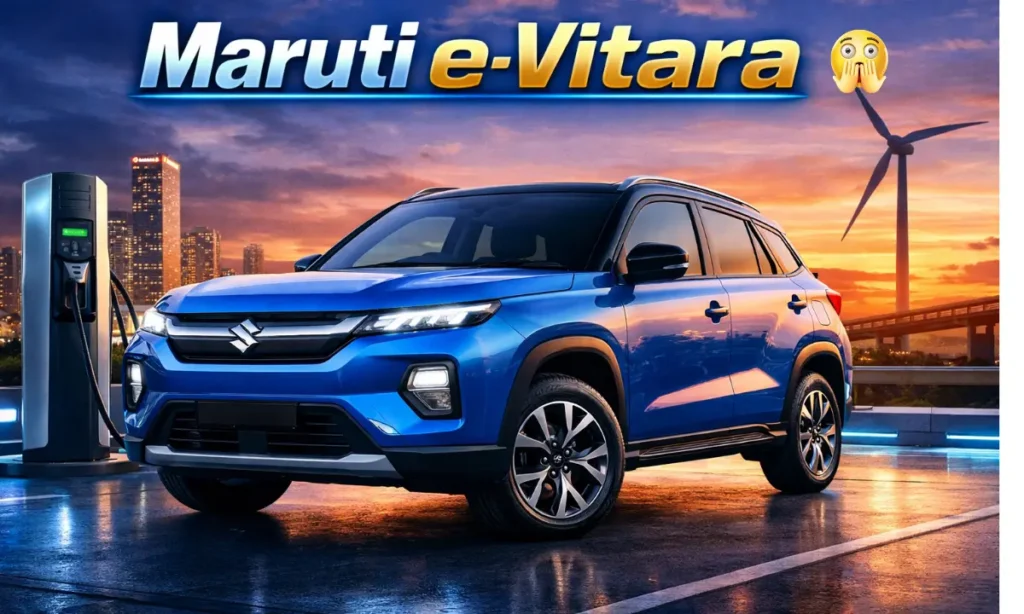
The e-Vitara is Maruti Suzuki’s first mass-market electric SUV, developed on a dedicated EV platform co-created with Toyota. If you’ve seen the eVX concept earlier, this production version stays close to that design philosophy — upright stance, SUV proportions, and proper road presence.
Unlike small city EVs, this one targets families upgrading from petrol compact SUVs, not early tech adopters only.
My Personal Opinion on Maruti e-Vitara launch specs
To be honest, the biggest strength of the Maruti e-Vitara is not how futuristic it looks or how many flashy features it offers. In my opinion, its real power has always been Maruti’s mindset — understanding things first and launching them only when the company feels confident. In an EV market where most brands are busy chasing range numbers and oversized screens, Maruti is clearly playing a slightly different game, and I’ve already explained that approach in detail earlier.
Personally, I feel the e-Vitara is designed for buyers who are not looking to experiment, but to buy peace of mind. For people who say, “I want to switch to an EV, but I don’t want unnecessary risk,” this SUV makes a lot of logical sense. Maruti has always focused on real-world usage — driving with the AC on, family on board, Indian roads, and Indian heat — and in an electric vehicle, these factors matter even more.
Another strong point, in my view, is Maruti’s service ecosystem. It’s something I’ve closely observed ever since I’ve been in the automotive field. Battery technology will continue to improve over time, but a reliable service network cannot be built overnight. This is exactly where the e-Vitara can quietly move ahead of its rivals.
Yes, if you’re a thrill-seeker or someone who wants every new feature before anyone else, this car might feel a bit boring. But if you’re thinking long-term — 6 to 8 years of ownership, stable running costs, and strong resale confidence — the e-Vitara could turn out to be a much more sensible choice. That’s my view — now I’d genuinely like to know what you think, so do share your opinion in the comments.
Read more. Mahindra XUV 7XO Feature Teased.
Platform and Battery: What’s Confirmed So Far?
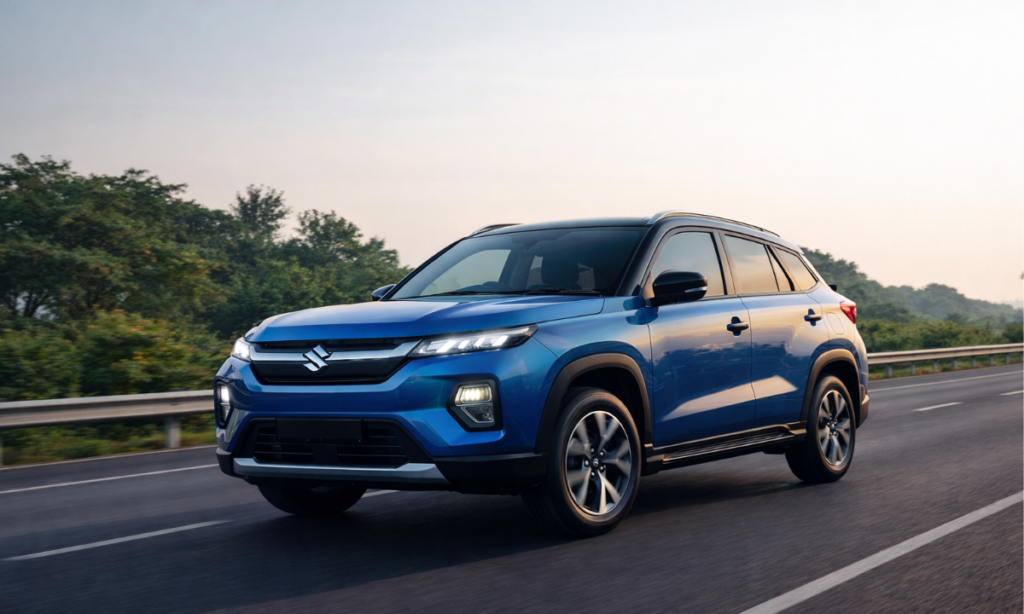
Maruti has officially confirmed that the e-Vitara will use a born-electric skateboard platform, not a converted petrol chassis. That’s good news because it directly improves cabin space, battery safety, and driving stability.
As per Maruti Suzuki’s official announcements, the e-Vitara will mark the brand’s first dedicated electric SUV for global markets.
Battery pack expectations
While Maruti hasn’t announced final numbers yet, official showcases indicate:
- Single and dual battery pack options
- Lithium-ion battery with liquid cooling
- Real-world focus rather than headline range figures
From an ownership point of view, this suggests consistent performance in Indian heat, something many global EVs still struggle with.
Expected Range and Charging Behaviour
Let’s be practical here. Maruti is unlikely to chase unrealistic range claims. Based on their positioning, expect:
- Around 450–500 km claimed range.
- Optimised for mixed city + highway use
- DC fast-charging support for highway travel
In real life, that should translate to 300+ km usable range, which is exactly what most Indian families need.
Exterior Design: Conservative, But Purposeful
If you expect wild futuristic styling, the e-Vitara may feel restrained. But that’s intentional.
The design prioritises:
- Clean surfaces
- Strong shoulder line
- High ground clearance looks.
- Aerodynamic efficiency without losing SUV character
Personally, I prefer this approach. Loud EV styling ages fast. Clean design doesn’t.
Interior Layout and Technology
Inside, Maruti seems to be moving upmarket — finally.
Key interior highlights expected.
- Large floating touchscreen
- Fully digital driver display
- Flat floor rear seating
- Improved material quality over current Maruti SUVs
This is where the e-Vitara needs to perform well, because EV buyers expect a modern, premium cabin experience, not cost-cutting.
Safety and Build Quality Focus
This is one area where Maruti knows it has to prove a point.
The Maruti e-Vitara launch specs will include:
- Multiple airbags as standard
- Advanced driver assistance features are available in higher trims.
- Stronger body structure due to battery protection needs
From an engineering standpoint, EVs offer better structural rigidity, which works in the buyer’s favour.
Expected Launch Timeline and Pricing Logic
Maruti has officially indicated a 2025 global debut, with Indian launch expected between late 2025 and early 2026.
Pricing reality check
Don’t expect aggressive undercutting. Realistically:
- Starting price likely above ₹20 lakh (ex-showroom)
- Positioned against the Hyundai Creta EV and the Tata Curvv EV
Maruti will rely more on trust, service network, and resale confidence than on price wars.
Should You Wait for the Maruti e-Vitara?
If you’re:
- A petrol SUV owner planning a safe EV upgrade
- Someone worried about long-term reliability
- A buyer who values service over gimmicks.
Then yes — waiting makes sense.
Maruti may not be first, but it often gets the second move right.
FAQs
When will the Maruti e-Vitara launch in India?
Maruti has confirmed a 2025 global debut, with India launch expected by late 2025 or early 2026.
What is the expected range of the e-Vitara?
The claimed range is expected to be around 450–500 km, translating to 300+ km in real-world conditions.
Will the Maruti e-Vitara support fast charging?
Yes, DC fast charging support is expected, suitable for highway usage.
Is the e-Vitara based on a petrol platform?
No. It uses a dedicated electric skateboard platform developed with Toyota.
Who is the e-Vitara best suited for?
Families upgrading from petrol SUVs who want reliability, space, and low running costs.
Final opinion:
The Maruti e-Vitara doesn’t try to impress loudly — and that’s its biggest strength. If Maruti delivers on safety, battery durability, and ownership experience, this could quietly become one of India’s most sensible electric SUVs for the next decade.