|
Getting your Trinity Audio player ready...
|
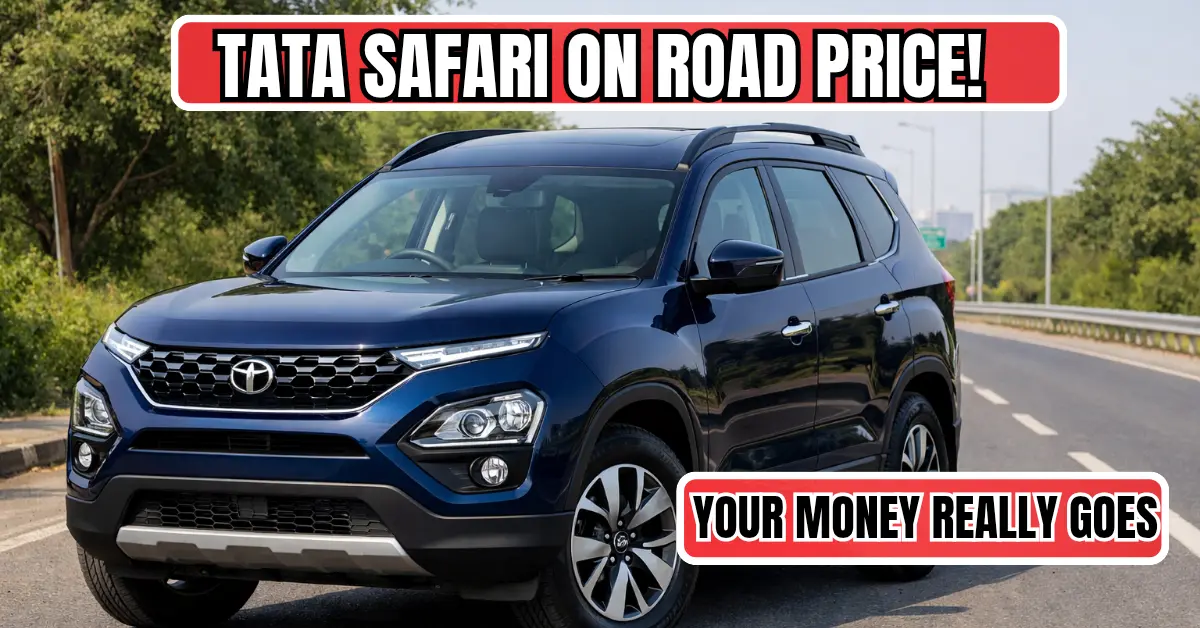
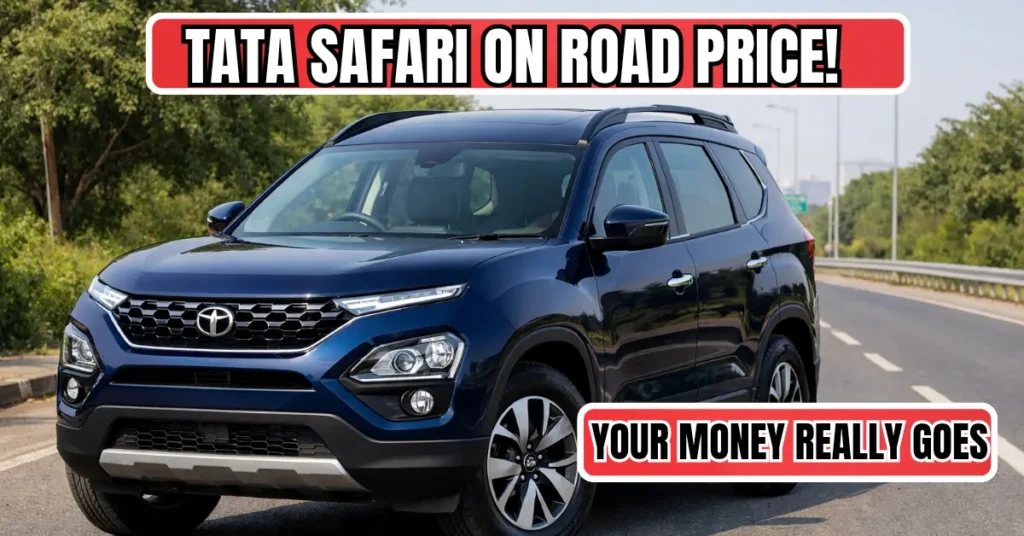
Let’s be honest — when most people look at the Tata Safari, the first thing they notice is the ex-showroom price. But the real shock usually comes later, when the on-road price is revealed. I’ve seen many buyers pause at this stage, not because the Safari isn’t appealing, but because they aren’t fully sure where all that extra money is going.
Just a clear look at what you’re actually paying for the Tata Safari On Road Price when you bring a Tata Safari home.
Why On-Road Price Matters More Than You Think
The ex-showroom price is just the starting point. The on-road price includes everything needed to legally and practically drive the car on Indian roads. For a premium SUV like the Safari, this difference can feel significant.
Understanding the breakdown helps you:
- Plan your budget realistically.
- Avoid last-minute surprises
- Decide which variant actually makes sense.
Ex-Showroom Price: The Base of Everything
This is the price Tata advertises. It covers:
- Vehicle manufacturing cost
- Factory margin
- Dealer margin
What it does not include are government taxes, registration, or insurance. Many buyers assume the jump to on-road price is dealer-driven, but most of it isn’t.
Read More. Kia Seltos Vs Hyundai in 2026, which one is better?
Renault Duster is coming back after a long time in 2026.
Tata Safari On Road Price Range in India: What You Should Expect
The Tata Safari’s on-road price can vary quite a bit depending on variant, fuel type, and your state. While Tata advertises an attractive ex-showroom price, the real on-road figure usually lands much higher once taxes and insurance are added.
In most Indian cities, the Tata Safari on-road price typically starts in the range of ₹18–19 lakh for the base variants and can go up to around ₹30 lakh or more for the top-end trims. States with higher road taxes push the final number even further.
What’s important to understand here is that:
- The difference between the two variants can be several lakhs on-road, not just on paper.
- Automatic and higher trims feel significantly more expensive once registered.
- Location plays a major role — the same Safari can cost noticeably more in one state than another.
This is why checking the exact on-road price in your city before finalising a variant is crucial. It helps you avoid budget stretch and choose a version that actually fits your needs, not just your wishlist.
Road Tax and Registration: The Biggest Jump
This is where the on-road price increases sharply.
Road tax varies by state, but for a vehicle in Safari’s price range, it usually takes a noticeable chunk of your money. Registration charges, number plates, and related fees also get added here.
This amount goes directly to the government — not Tata, not the dealer. It’s unavoidable and often the single biggest reason why the on-road price feels much higher than expected.
Insurance: Protection That Adds Cost
Insurance is mandatory, and with a car like the Safari, premiums are naturally higher.
Your insurance cost depends on:
- Variant price
- Engine type
- Add-ons like zero depreciation
Dealers often quote a higher insurance amount. Smart buyers usually compare prices online or negotiate. This is one area where you can actually save some money if you pay attention.
Handling and Logistic Charges: Small but Not Invisible
Dealers may add handling or logistics charges. Some are legitimate, others are negotiable.
It’s always worth asking:
- What exactly is this charge for?
- Is it mandatory or optional?
Many buyers don’t question these amounts, but they should.
Accessories and Add-Ons: Where Emotions Take Over
This is where many buyers overspend.
Chrome kits, seat covers, mats, dash cams — individually they don’t look expensive, but together they add up quickly. None of these is mandatory.
If you’re stretching your budget already, it’s smarter to keep accessories minimal at delivery and add them later if needed.
So, Where Does Your Money Really Go?
When you look at the Tata Safari on-road price holistically:
- A large part goes to government taxes.
- A fair amount goes to insurance.
- A smaller portion goes to dealer-related charges.
- The rest are optional extras you choose
Very little of the jump is “hidden” — it just isn’t explained clearly most of the time.
Is the Tata Safari Worth Its On-Road Price?
That depends on what you value.
You’re paying for:
- A strong road presence
- Spacious cabin and comfort
- Safety features and build quality
- Tata’s growing trust factor
If those matter to you, the on-road price starts making more sense. If you’re purely price-sensitive, the Safari may feel expensive compared to smaller SUVs.
Final Verdict on Tata Safari On Road Price
The Tata Safari’s on-road price isn’t just a random inflated number. It’s a combination of taxes, safety, legality, and the choices you make during purchase.
Once you understand the breakdown, the decision becomes easier. Instead of asking “Why is it so expensive?”, the better question is “Am I getting what I want for this money?”