|
Getting your Trinity Audio player ready...
|
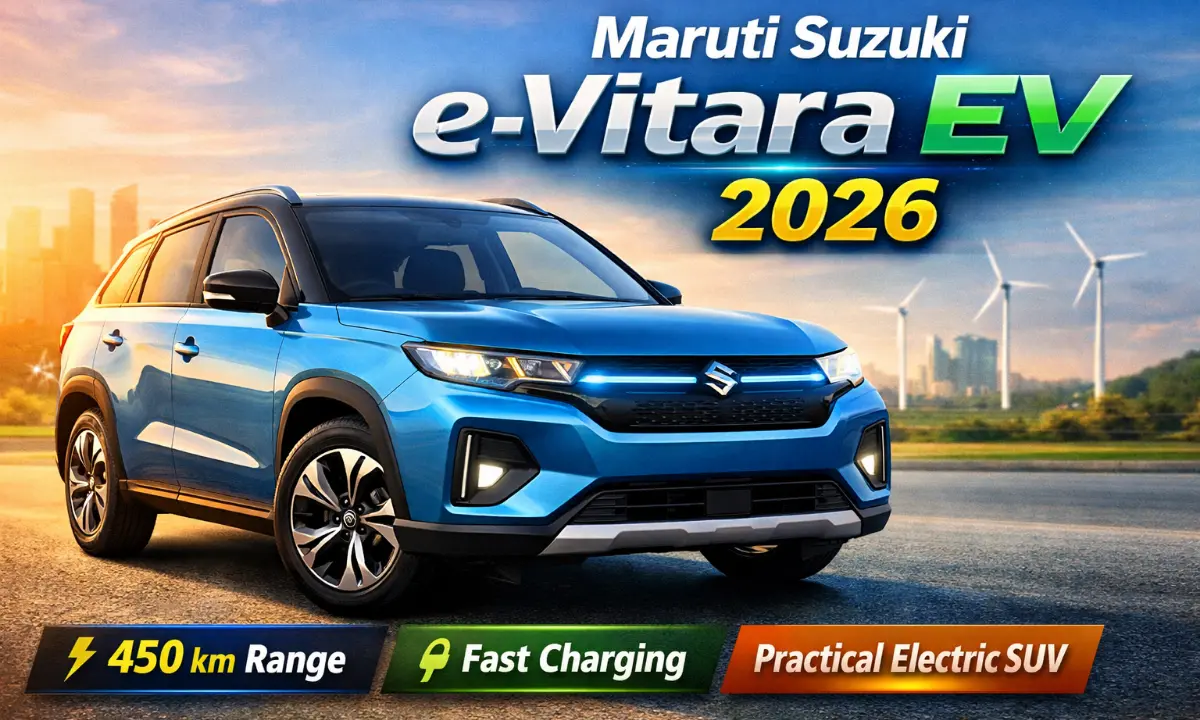
By December 2025, the Indian EV space will feel noisy. Every new electric SUV seems to shout bigger range numbers, faster charging claims, and more screens inside the cabin. But when you step back and look at how people actually use their cars every day, a simple truth appears — not everyone is chasing the biggest number on paper. Most buyers just want a Maruti Suzuki e-Vitara electric SUV EV that fits into their routine without adding stress.
That’s where the Maruti Suzuki e-Vitara quietly becomes interesting.
This is not an electric SUV built for hype or headlines. It feels designed for people who ask one honest question before buying an EV: Will this car make my daily life easier, or more complicated? If you see an EV as a long-term decision rather than a tech experiment, understanding the Maruti Suzuki e-Vitara electric SUV range and overall approach really matters.
A Late Entry — But a Thoughtful One
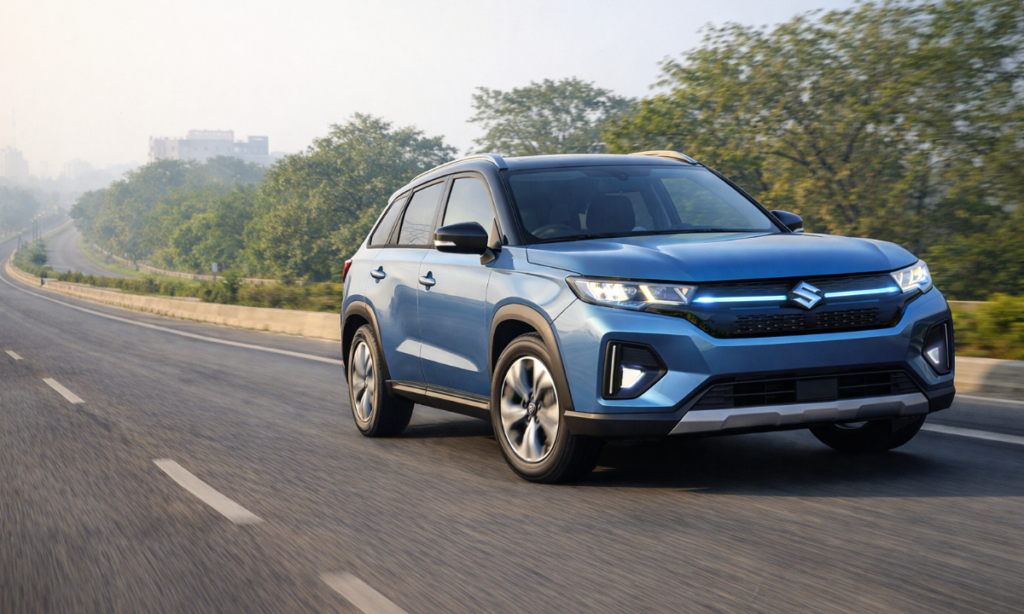
Maruti did not rush into the EV race, and frankly, that delay feels intentional. While competitors were busy marketing 500-km figures, Maruti was busy testing, collecting real-world data, and preparing its supplier and service ecosystem.
The philosophy behind the e-Vitara is simple and very Maruti-like:
An EV should never fail a family in daily use.
This mindset shows clearly once you look beyond spec sheets.
Expected Electric Range: What Will You Actually Get?
Officially, the Maruti Suzuki e-Vitara electric SUV range is expected to sit around 450–500 km (MIDC cycle). But experienced buyers know that real-world performance matters more than certified numbers.
Based on Maruti’s track record and current EV benchmarks, realistic expectations look like this:
- City driving with AC ON: around 380–420 km
- Highway driving at 100–110 km/h: roughly 320–360 km
These numbers may not sound dramatic, but they feel believable — and in the EV world, trust is a bigger feature than hype.
Battery and Charging: Built Around Indian Habits
The e-Vitara is expected to use a modern lithium-ion battery pack with DC fast-charging support. A 10–80% charge in about 35–40 minutes should be possible on a fast charger, which is practical for highway breaks rather than unrealistic pit-stop promises.
More importantly, Maruti seems to be focusing heavily on the home charging experience. With a 7.2 kW AC charger, a full charge should take 7–8 hours, making overnight charging easy — exactly how most Indian households will use an EV.
Read More. Maruti e-Vitara launch specs in 2025 revealed.
In 2026, India trusts the Renault Duster again.
Useful features, Not Showy
Maruti doesn’t chase gimmicks, and the e-Vitara reflects that philosophy. Instead of overwhelming buyers with novelty, the focus is on everyday usability.
Expected highlights include:
- A large touchscreen with an EV-specific interface
- Digital instrument cluster with accurate range prediction
- Ventilated seats (a smart move for Indian weather)
- 360-degree camera
- ADAS on select variants
EV-specific tools like adjustable regenerative braking, real-time energy data, and smart route planning with charging stops make the technology feel helpful rather than intimidating.
Interior Space and Comfort: Family Comes First
The cabin design avoids being experimental — and that’s actually a strength. A flat rear floor, comfortable rear seat angle, and sensible boot space even after battery packaging make the e-Vitara suitable for both daily office runs and weekend trips.
This doesn’t feel like a “tech demo” car. It feels like a family SUV that just happens to be electric.
Suzuki has officially presented the e-Vitara as a global strategic BEV, with its role in the brand’s worldwide EV plans highlighted during the Bharat Mobility Global Expo 2025.
Safety and Build: Quietly Strong
Maruti’s recent focus on safety continues here. Expect essentials like six airbags, ESC, traction control, and a strong HEARTECT-EV platform, along with proper battery thermal protection.
There’s no drama here — just solid, confidence-building engineering.
Expected Price: The Real Game Changer
Realistically, the e-Vitara is expected to land between ₹18–22 lakh (ex-showroom). If Maruti prices it aggressively, it will directly pressure rivals like the Tata Curvv EV and upcoming Hyundai electric SUVs.
Personal Take: Why the e-Vitara Feels Different
Honestly, the Maruti Suzuki e-Vitara feels like a mature EV decision, not an experiment. Many EVs today impress on paper but ask for compromises in daily life. The e-Vitara flips that approach — real Indian usage first, technology second.
Indian buyers don’t just want excitement. They want certainty:
Will the car start every morning?
Will AC usage kill range anxiety?
Will service centres actually understand the technology?
The e-Vitara seems designed to answer these questions quietly, without overacting. It’s for people who want an EV as a household car, not a showroom showpiece. And in the long run, that mindset is what will make EV ownership truly successful.
Final Thought:
The Maruti Suzuki e-Vitara electric SUV range may not chase headlines, but its logic, restraint, and real-world focus make it one of the most sensible electric SUVs India is about to see.