|
Getting your Trinity Audio player ready...
|
Maruti Flex Fuel Car 2026: Every time we talk about the future of cars in India, the conversation usually starts with electric vehicles.
But here’s something interesting.
While most buyers are busy comparing battery range and charging times, Maruti Suzuki is working on a different solution that could fit much more naturally into the daily lives of millions of Indians.
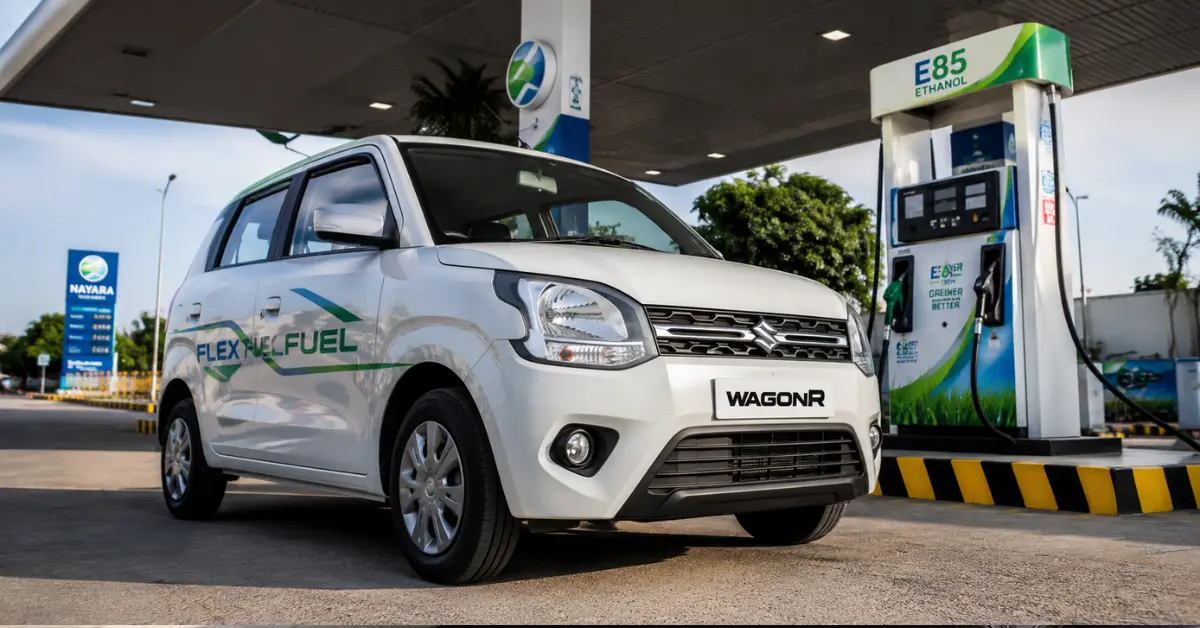
The upcoming Maruti Flex Fuel Car 2026 isn’t just another new vehicle. It represents a technology that could help reduce fuel import dependency, support cleaner mobility, and make the transition away from conventional petrol easier for ordinary buyers.
For many people, this may end up being one of the most practical automotive developments of the next few years.
Why Maruti Is Investing in Flex Fuel Technology
India’s car market is very different from many global markets.
While EV adoption is growing, millions of drivers still depend on long-distance travel, limited charging infrastructure, and affordable ownership costs.
Maruti Suzuki understands this challenge.
Instead of focusing only on electric vehicles, the company is exploring multiple solutions, including:
- CNG vehicles
- Hybrid technology
- Flex fuel technology
- Future EV platforms
This strategy gives buyers more options instead of pushing everyone toward a single technology.
The reader can read about this: Maruti Suzuki WagonR Flex Fuel Launch – This Small Hatchback Could Play a Bigger Role in India’s Future Than You Think.
What Exactly Is a Flex Fuel Vehicle?
A flex-fuel vehicle is designed to run on both petrol and higher ethanol fuel blends.
In simple terms, the engine can adapt to different fuel mixtures without requiring major changes from the owner.
That means drivers can continue using fuel stations just like they do today.
The difference is that the vehicle can utilise fuels containing much higher ethanol content than conventional petrol vehicles.
The reader can read about this: Tata Tiago EV 2026 — ₹4.69 Lakh Price Shocked Everyone, Here’s Why
Why Ethanol Matters for India
This is where the story becomes bigger than just one car.
India imports a significant amount of crude oil every year.
Increasing ethanol usage offers several potential benefits:
- Reduced oil import dependence
- Better energy security
- Support for Indian agriculture
- Lower carbon emissions
- Greater fuel diversification
Because of these advantages, the government has been actively encouraging higher ethanol blending targets.
The Maruti Flex Fuel project aligns closely with that long-term vision.
Readers interested in Maruti Suzuki’s broader sustainability and alternative-fuel initiatives can explore the official green mobility section for more information.
Current industry trends suggest that alternative fuel technologies may continue playing an important role alongside EVs rather than being replaced by them.
The Real Question Most Buyers Are Asking Maruti Flex Fuel Car 2026
Whenever flex fuel is discussed, one question usually comes up:
“Why not just buy an EV?”
The answer depends on individual usage.
For many buyers:
- Charging access remains limited.
- Apartment charging can be difficult.
- Long-distance travel remains common.
- Upfront EV costs can feel high.
Flex fuel attempts to solve environmental and fuel dependency concerns without changing how people currently use their vehicles.
That makes it an interesting middle ground.
Expected Maruti Flex Fuel Car 2026 Specifications
While Maruti has showcased flex-fuel technology publicly, final production specifications may vary.
Expected Details
| Specification | Expected Information |
| Engine | 1.2L Flex Fuel Petrol |
| Fuel Compatibility | Petrol + High Ethanol Blends |
| Transmission | Manual / AMT Expected |
| Seating Capacity | 5 |
| Segment | Hatchback |
Final launch specifications may differ depending on regulatory approvals and market rollout plans.
What Buyers Often Overlook About New Technologies
One mistake many people make is focusing only on the newest trend.
A few years ago, everyone discussed diesel.
Then the market shifted toward petrol.
Today, EVs dominate headlines.
But the future may not belong to one technology alone.
Many experts believe India’s mobility ecosystem could include:
- EVs for urban users
- Hybrids for mixed usage
- CNG for cost-conscious buyers
- Flex fuel for fuel flexibility
Different technologies may serve different customer needs.
That is why flex fuel deserves attention.
Maruti Flex Fuel vs Other Fuel Technologies
| Technology | Biggest Advantage | Main Challenge |
| Flex Fuel | Familiar Refueling Experience | Ethanol Availability |
| EV | Zero Tailpipe Emissions | Charging Infrastructure |
| CNG | Lower Running Cost | Boot Space Compromise |
| Hybrid | Better Fuel Efficiency | Higher Purchase Price |
This comparison shows why manufacturers are increasingly exploring multiple pathways instead of relying on a single solution.
My Perspective on the Flex Fuel Strategy
One thing that stands out about Maruti’s approach is practicality.
Instead of asking millions of buyers to completely change their driving habits, flex fuel works within an ecosystem that already exists.
That may not sound as exciting as a futuristic EV launch, but practical solutions often create the biggest long-term impact in a country as large and diverse as India.
What This Means for Everyday Car Buyers
For the average buyer, the flex-fuel conversation is not really about technology.
It is about choice.
The more options available, the easier it becomes for consumers to select a vehicle that matches their lifestyle, budget, and driving needs.
That flexibility may become increasingly important as the Indian auto market continues evolving.
FAQ Maruti Flex Fuel Car 2026
What is a Maruti Flex Fuel Car 2026?
A flex-fuel vehicle can run on petrol as well as higher ethanol fuel blends.
Is a flex-fuel car an electric vehicle?
No. It uses an internal combustion engine designed to handle different fuel mixtures.
Who Should Pay Attention to This Technology?
Flex-fuel vehicles may be particularly interesting for:
- Long-distance drivers
- Buyers without home charging access.
- Customers looking for alternatives to conventional petrol cars
- People interested in cleaner mobility without switching to EVs
On the other hand, buyers specifically seeking zero-emission driving may still prefer fully electric vehicles.
The interesting part is not whether flex fuel replaces EVs. The real story is that India’s future mobility ecosystem may become much more diverse than many people currently expect.