|
Getting your Trinity Audio player ready...
|
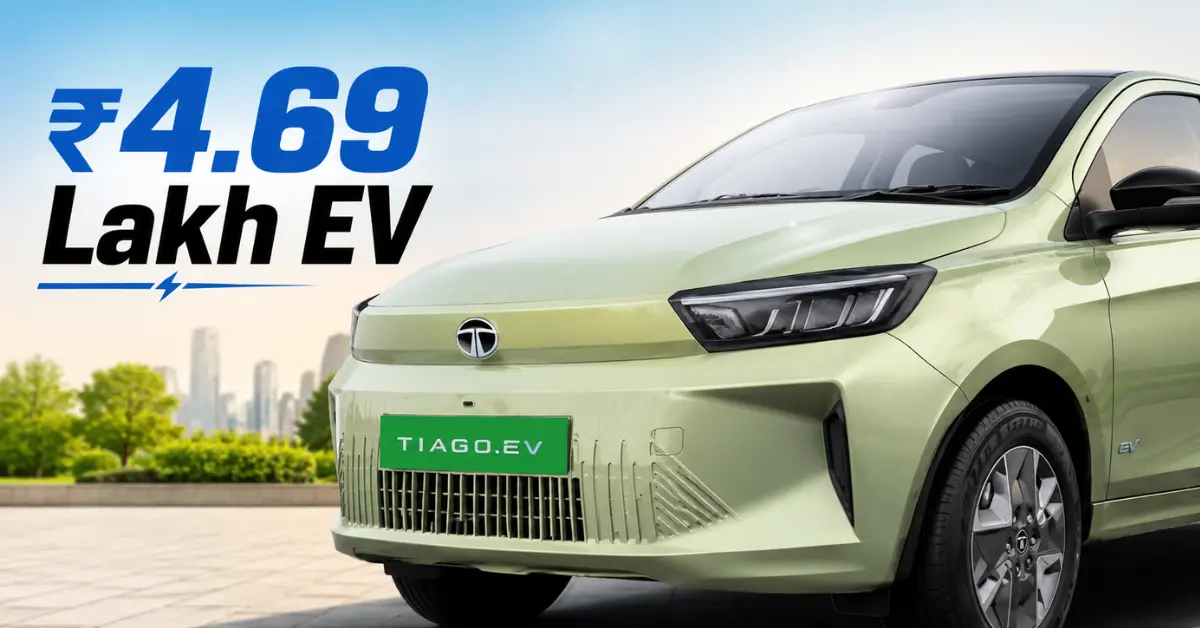
Tata Tiago EV 2026: ₹4.69 lakh for an electric car sounds almost unbelievable in 2026.
But the real surprise isn’t the price tag—it’s the new ownership model behind it. Tata Motors is using Battery-as-a-Service (BaaS) to reduce the upfront cost of the Tiago EV, making EV ownership look far more accessible than before.
For buyers who have always liked the idea of an electric car but hesitated because of the high purchase price, this update is worth paying attention to. Here’s what the new Tata Tiago EV 2026 Facelift brings, how the BaaS model works, and whether it actually makes sense for everyday users.
Why the ₹4.69 Lakh Price Is Creating Buzz
The headline figure has grabbed attention across the auto industry.
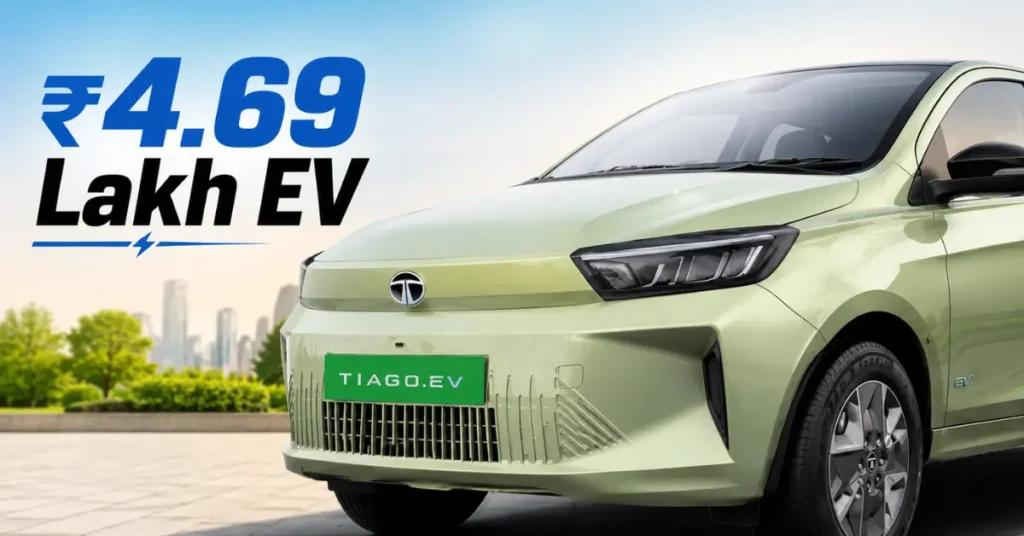
However, the ₹4.69 lakh starting price applies under Tata’s Battery-as-a-Service model, where the vehicle and battery costs are separated.
Instead of paying for the entire EV upfront, buyers can purchase the car at a lower price and subscribe to battery usage separately.
How the BaaS Model Works
Under this system:
- The car price becomes significantly lower.
- Battery usage is billed separately.
- Initial ownership cost drops
- More buyers can enter the EV market.
This model is designed for people who want lower monthly expenses rather than a large one-time investment.
For many first-time EV buyers, that could make a bigger difference than adding another feature or increasing range by a few kilometres.
Tata Is Solving a Different Problem
Most EV manufacturers focus heavily on battery size and driving range.
Tata seems to be addressing something equally important: affordability.
A large number of Indian buyers are interested in EVs but struggle to justify the higher upfront price compared to petrol cars.
The Tiago EV BaaS model directly targets that concern.
Instead of asking buyers to spend more on day one, Tata is trying to spread the cost over ownership.
That makes this launch more important than a typical facelift update.
Maruti Suzuki WagonR Flex Fuel Launch – This Small Hatchback Could Play a Bigger Role in India’s Future Than You Think
What’s New in the Tata Tiago EV 2026 Facelift?
The Tiago EV was already one of India’s most accessible electric cars.
The facelift focuses on refinement rather than dramatic changes.
Exterior Updates
Expected updates include:
- Refreshed front fascia
- Updated LED lighting elements
- New alloy wheel design
- Revised bumper styling
- Cleaner EV-inspired detailing
The overall shape remains familiar, but the car looks fresher and more modern.
Toyota Innova Crysta 2026 Gets More Premium Than Before – Price Starts At ₹19.72 Lakh.
Tata Tiago EV 2026: Interior Improvements
The cabin continues to focus on practicality and daily usability.
Expected highlights include:
- Large touchscreen infotainment system
- Wireless smartphone connectivity
- Digital instrument display
- Connected car features
- Improved interior materials
The Tiago EV isn’t trying to compete with premium EVs. Instead, it focuses on offering the features that most city drivers actually use.
Range: The Question Every Buyer Asks
No EV discussion in India is complete without talking about range.
The Tiago EV continues to offer battery options designed primarily for urban commuting.
Expected Driving Range
| Variant | Claimed Range |
| Medium Range | Around 250 km+ |
| Long Range | Around 315 km+ |
Actual range will depend on traffic conditions, driving style, weather, and AC usage.
Tata Tiago EV 2026: The Range Reality Most Buyers Ignore
Many buyers compare EVs using only the highest range number.
But a better question is:
How much do you actually drive every day?
For someone covering 30–50 km daily in city traffic, even the medium-range version may be more than sufficient.
My Take on the BaaS Model
In my opinion, the Tiago EV BaaS model is one of the smartest attempts we’ve seen to make electric mobility accessible to ordinary Indian buyers without forcing them into a huge upfront investment.
Whether it becomes a long-term success will depend on subscription pricing and customer acceptance, but the idea itself addresses a genuine market problem.
Tata Tiago EV vs Popular Alternatives
| Vehicle | Starting Price | Key Advantage |
| Tata Tiago EV | ₹4.69 lakh (BaaS) | Lowest Entry Cost |
| MG Comet EV | ₹5 lakh+ (BaaS) | Compact Urban Mobility |
| Tata Punch EV | ₹9 lakh+ | SUV Styling |
| Citroen eC3 | ₹11 lakh+ | Larger Cabin Space |
This comparison highlights why the Tiago EV occupies a unique position.
It isn’t chasing luxury buyers or long-range enthusiasts.
It is focused on affordability and practicality.
A Bigger Change Is Happening in India’s EV Market
For years, manufacturers competed by offering larger batteries and higher range figures.
Now the market is starting to evolve.
Companies are beginning to experiment with new ownership models, flexible financing, and lower entry barriers.
That shift may end up having a bigger impact on EV adoption than battery technology alone.
The Tiago EV facelift is one of the clearest examples of that trend.
Readers interested in Tata Motors’ broader electric vehicle strategy and upcoming EV developments can also explore the Tata EV Official Website for official updates and product information.
Tata Tiago EV 2026 Safety and Everyday Practicality
The Tiago platform already has a strong reputation among budget-conscious buyers.
Key highlights include:
- Multiple airbags
- ABS with EBD
- Electronic stability support
- Rear parking assistance
- Strong structural design
For first-time EV buyers, familiarity and safety remain major confidence factors.
FAQ Tata Tiago EV 2026
What is the starting price of the Tata Tiago EV 2026 Facelift?
The Tiago EV starts at ₹4.69 lakh under the Battery-as-a-Service model.
What is Battery-as-a-Service (BaaS)?
BaaS separates the battery cost from the vehicle price, allowing buyers to pay for battery usage through a subscription.
Who Should Consider the Tiago EV?
The Tiago EV makes the most sense for:
- Daily city commuters
- First-time EV buyers
- Buyers looking for lower running costs
- Families needing a second city-focused car
- People interested in affordable electric mobility
It may not be the best fit for:
- Frequent long-distance highway travellers
- Buyers looking for SUV styling
- Users who prefer traditional ownership without subscriptions
- People needing maximum driving range
The biggest takeaway from this launch isn’t the facelift itself. It’s the fact that Tata is trying to remove one of the biggest barriers stopping ordinary buyers from entering the EV market.