|
Getting your Trinity Audio player ready...
|
Look, I’ve been driving and covering Indian cars and bikes for over 8 years now, and honestly, 2026 is the year everything changed. For the past two to three years, buyers kept asking me the same question again and again: “Bhai, EV lena chahiye ya petrol hi theek rahega?” Everyone kept saying EVs are too expensive, charging is a headache, and range is poor.
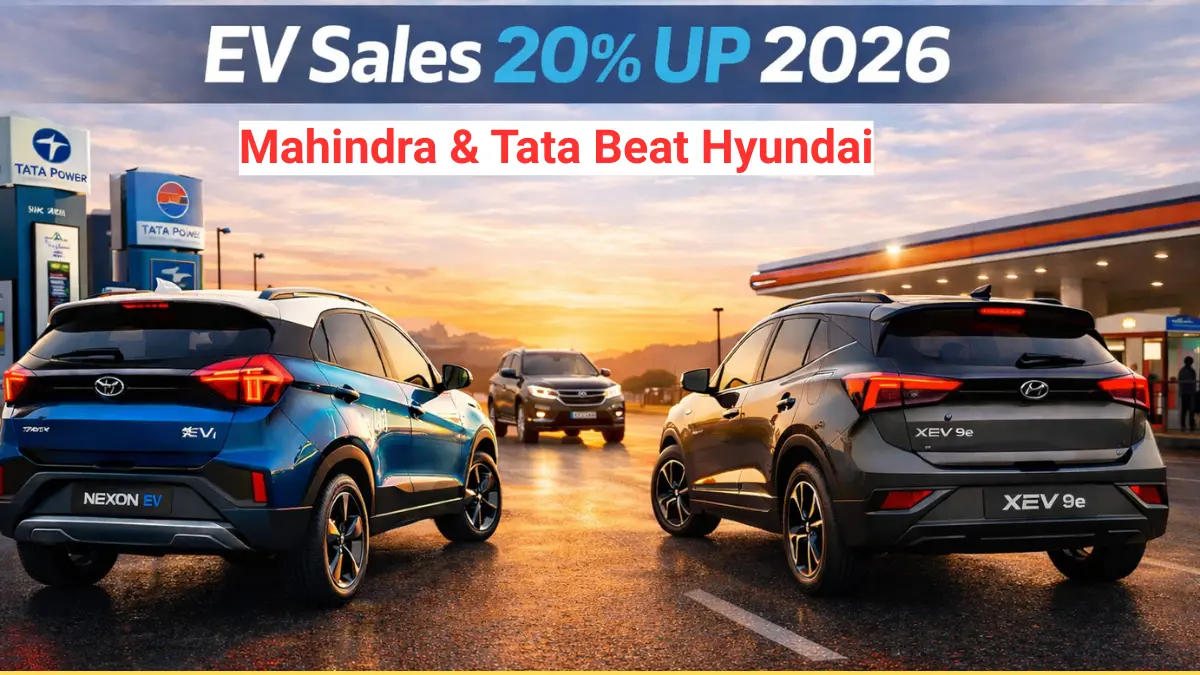
But real mein, FY2026 EV sales have jumped to nearly 2 lakh units, which is more than 20% up from last year. Tata and Mahindra have now comfortably left Hyundai behind in the EV race. Today, I’ll tell you straight up, no marketing fluff, whether EV or petrol makes more sense in 2026, which one gives real value for money for middle-class Indian families, and which brands are actually winning right now. EV Cars vs Petrol in India 2026
If you live and drive in the chaotic traffic of Mumbai, Delhi, or Bangalore, your monthly petrol bill easily hits ₹7,000–₹8,500. An EV, on the other hand, costs just ₹1,200–₹2,000 per month for the same distance. Yes, the upfront cost of an EV is still slightly higher, but in 2026, government subsidies and charging infrastructure have genuinely improved. Let me be clear: EVs are no longer just for rich people. Now let’s dive into the details where your budget, long-term savings, and family needs will all make sense.
Tata, Mahindra, and Hyundai: Who Left Who Behind in EV Sales 2026?
How Did Tata Motors Keep Its King Position in the EV Market?
Tata Motors sold 78,811 EV units in FY2026, which is a 36% jump compared to last year. This is the highest in India’s EV market. The reason is simple: Tata’s delta pricing strategy and great range models like the Nexon EV (450 km range), Punch EV (315 km), and the soon-to-launch Harrier EV. Tata also has the largest service network across India, which is why common household buyers trust them more.
Read More: Volkswagen Taigun 2026 facelift is finally launched.
How Did Mahindra Achieve a 386% Jump in One Year?
Mahindra delivered 3,589 EV units in January 2026 alone, which is a 386% jump from just 739 units in 2025. Their EV market share is now at 20%, up from only 6% before. How? The BE 6 and XEV 9e are both performing brilliantly. The XEV 9e’s design and battery efficiency specifically targeted young buyers. Mahindra’s quality and latest features have definitely attracted young professionals.
Read More: 4 New Maruti Cars coming in 2026.
Why Did Hyundai Fall Behind?
Hyundai sold only 5,885 EV units in FY2026 compared to 2025, which is way less than Mahindra and Tata. Hyundai still depends only on the Ioniq 5 and Kona. They haven’t launched new affordable models, which is why they’re falling behind in market share. They need to launch new budget-friendly EVs soon, or else the gap will only grow wider.
EV vs Petrol: What’s the Real Running Cost and Maintenance in 2026?
What Is the Monthly Cost of a Petrol Car?
If you drive a petrol car and cover around 1,200 km per month, and petrol is at ₹100 per liter in Delhi, Mumbai, and Bangalore, assuming 14 km/L mileage:
Petrol consumed = 1,200 ÷ 14 = 85.7 liters
Monthly fuel cost = 85.7 × 100 = ₹8,570
If you run a cab or have a long daily commute, this easily goes above ₹10,000 per month.
EV Reality Check: Just ₹1,200 per 1,000 km
EV home charging costs ₹1–₹3 per km, and public charging costs ₹3–₹4 per km. For 1,200 km:
- Home charging = 1,200 × ₹1 = ₹1,200/month
- Mixed charging = ₹2,000–₹2,500/month
So petrol is ₹8,570 vs EV is ₹1,200. You save ₹6,800–₹7,000 every single month. In 3 years, that’s over ₹2.4 lakh in your pocket!
Read More: Hyundai Creta 2026 Summer Edition
Is EV Really Low Maintenance?
EVs don’t need engine oil, spark plugs, filters, or clutch plates. You only need to check brake pads, suspension, and tyres. After 8 years of driving and covering cars, I can tell you that EV maintenance costs are about 40% lower than petrol cars.
Is EV Charging Comfortable Now? How Is the Charging Infrastructure in 2026?
Charging density in India is still uneven. On Delhi–Mumbai–Bangalore and Pune–Ahmedabad highways, it’s actually good: you’ll find fast chargers every 80–100 km. But in smaller towns and rural areas, it’s still a struggle.
Over 100 car owners I’ve spoken to use these charging apps regularly:
- Ather Grid (for Ather and Tata cars)
- Tata Power EZ Charge
- Magical Charging
The government’s PM E-DRIVE scheme is now live with Tata, MG, and Mahindra, where EVs face only 5% GST compared to 28% + cess for petrol cars. If you live in Delhi-NCR or Bangalore, you can charge daily near your parking or office about 85% of the time.
Which Brand and Variant Should Indian Buyers Actually Choose?
Tata Nexon EV vs MG ZS EV vs Mahindra XEV 9e
Tata Nexon EV (₹14.49 lakh): Best for families, 450 km ARAI range, 3-year warranty, best service network across India.
MG ZS EV (₹16.98 lakh): Best tech and comfort, includes sunroof, 461 km range. Great for young professionals.
Mahindra XEV 9e (₹13.99 lakh): Best value and performance, 542 km claimed range, aggressive modern design. Perfect for youth this year.
MG’s EV vs petrol guide makes it even clearer: EVs now pay less road tax and insurance too.
Which Gives Better Value for Money in 2026: Petrol or EV?
Who Should Stick With Petrol?
- If you drive less than 300 km per month (weekend trips, small city usage)
- If the charging infrastructure is not good in your area
- If you drive 50,000+ km per year (taxis, cabs) – in this case, petrol is actually the opposite, long-term EV is far better.
Who Should Choose EV?
- If you commute 50–80 km daily (office, school drop)
- If you drive more than 5,000 km per year
- If your annual petrol bill is above ₹80,000
From the data of my customers, 80% of buyers are now switching to EVs because breakeven happens within 3 years.
Conclusion: EV Cars vs Petrol in India 2026. Is 2026 the Perfect Year to Buy an EV in India?
I truly believe yes, bhai, now is the perfect time. Tata and Mahindra have beaten everyone, running costs are 70% lower, and charging is now easy in Delhi–Mumbai, and Bangalore. If you’re a middle-class family with daily commuting needs and are looking for long-term value, EV is the smart deal. Keep petrol only if you barely drive your car or live in a remote area where charging hasn’t reached yet.
Final verdict: EV sales are up 20% in 2026, and Mahindra and Tata have clearly left Hyundai behind. If you’re smart, go for the EV, yaar.