
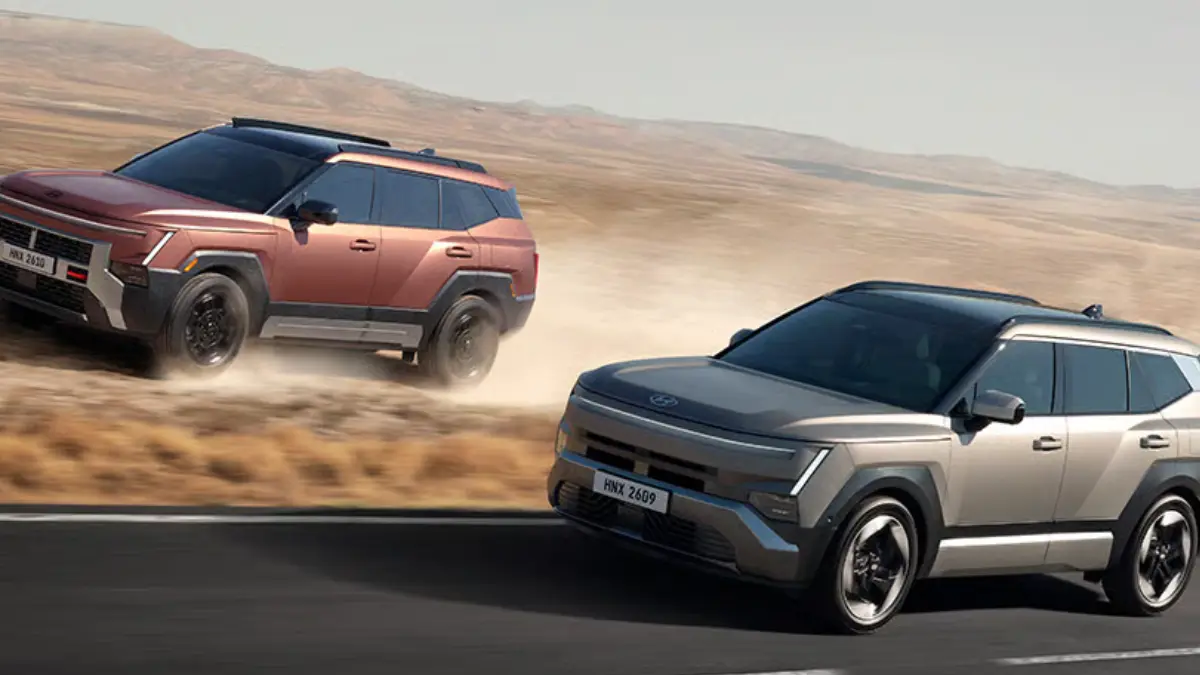
New Hyundai Tucson has become even more advanced with its latest-generation model. After introducing the fifth-generation Tucson, Hyundai has now revealed its Plug-in Hybrid (PHEV) version as well. The global SUV will be offered with petrol, mild-hybrid, full-hybrid and plug-in hybrid powertrain options, although availability will vary depending on the market.
The new Tucson Plug-in Hybrid is particularly important for the European market, where Hyundai will introduce the short-wheelbase version. It will compete against SUVs such as the Toyota RAV4 Plug-in Hybrid.
The most interesting part is that Hyundai has not only increased the battery capacity but has also made important mechanical changes to the hybrid system.
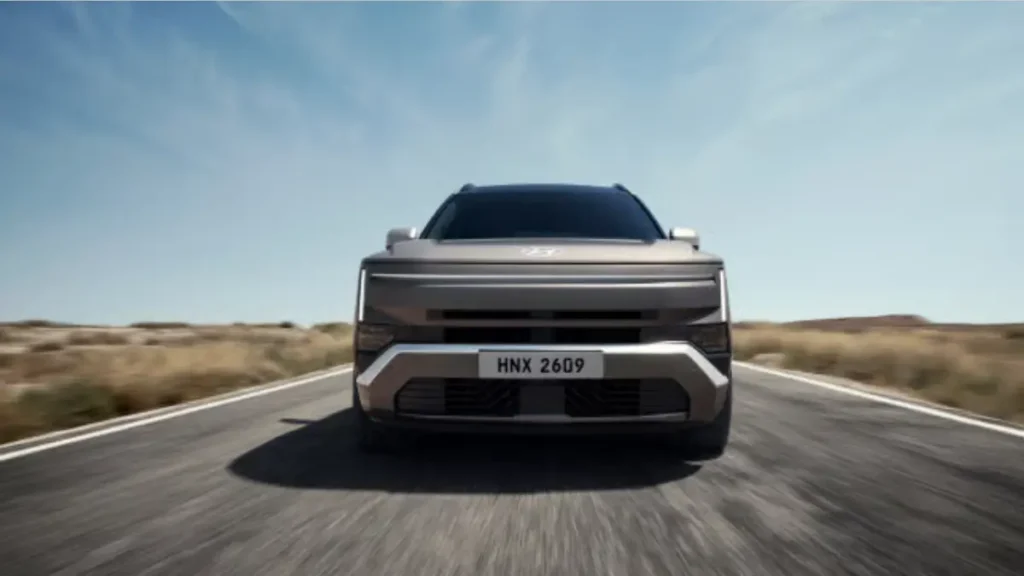
New Hyundai Tucson Plug-in Hybrid Gets 1.6L Turbo Engine
The new Tucson Plug-in Hybrid continues with a 1.6-litre turbocharged direct-injection four-cylinder petrol engine, but the hybrid system has been upgraded compared with the previous-generation model.
The powertrain uses two electric motors:
- P1 electric motor: 13 kW / 17 hp
- P2 electric motor: 79 kW / 106 hp
- Petrol engine: 1.6-litre turbocharged four-cylinder
- Transmission: 6-speed automatic
- Drive: Mechanical AWD as standard
The P1 motor is one of the key technical changes. In the previous system, Hyundai used a P0 belt-driven motor that helped with engine starting and electricity generation.
The new P1 motor is integrated into the transmission, similar to the P2 motor. This removes the belt connection and helps reduce the friction losses associated with the older setup.
The P1 motor can also provide additional assistance to the petrol engine when required.
292 PS Power Makes Tucson PHEV Surprisingly Quick
The combined output of the new Tucson Plug-in Hybrid stands at 292 PS (288 hp) with 380 Nm of torque.
Hyundai says the SUV can accelerate from 0 to 100 km/h in 7.9 seconds.
Interestingly, the older Tucson Plug-in Hybrid had slightly lower combined output at 288 PS (284 hp) and 379 Nm. It could complete the 0-100 km/h run in 7.5 seconds with FWD and 7.6 seconds with AWD.
The new model is therefore marginally slower despite producing slightly more power.
The main reason is likely the larger battery pack and additional weight.
Also read: Honda October 2026 Offers: Elevate Gets ₹2.34 Lakh Benefits, City ₹1.70 Lakh
Bigger 17.1 kWh Battery Brings Up to 81 Km EV Range
The battery is another major change.
The previous Tucson Plug-in Hybrid used a 13.8 kWh battery, while the latest model gets a much larger 17.1 kWh battery pack.
Hyundai is targeting an electric-only driving range of up to 81 km for the AWD-only version under the WLTP testing cycle.
For comparison, the previous model was rated for:
- 67–70 km WLTP: FWD
- 63 km WLTP: AWD
So, despite the larger battery and AWD configuration, Hyundai is targeting a significantly improved electric driving range with the new generation.
This could be particularly useful for European buyers who regularly use their SUV for shorter urban journeys.
Also read: 2026 Skoda Slavia Facelift Launch Tomorrow: New 8-Speed Auto and Premium Features
No DC Fast Charging Support
One area where the new Tucson Plug-in Hybrid doesn’t appear to match its Toyota rival is charging capability.
The SUV does not support DC fast charging. It continues to rely on an AC charging system with a maximum charging input of 7.2 kW.
Hyundai has not yet announced the official 10–100% charging time for the new model.
For reference, the previous-generation Tucson PHEV took around 1 hour and 42 minutes for charging under its specified conditions. The larger battery means the new model is expected to require more time.
This is one area where Hyundai could have offered more flexibility, particularly considering the increasing popularity of faster charging technology.
New Tucson Is Bigger Than Before
The fifth-generation Tucson has been developed in both short-wheelbase (SWB) and long-wheelbase (LWB) forms.
For Europe, Hyundai will offer the short-wheelbase version.
European SWB Tucson Dimensions
| Dimension | New Tucson SWB |
| Length | 4,560 mm |
| Width | 1,900 mm |
| Height | 1,670 mm |
| Wheelbase | 2,720 mm |
Compared with the previous model, the SWB version is:
- 35 mm longer
- 35 mm wider
- 20 mm taller
- 40 mm longer in wheelbase
Long-Wheelbase Tucson Dimensions
The global LWB version measures:
| Dimension | New Tucson LWB |
| Length | 4,700 mm |
| Width | 1,905 mm |
| Height | 1,685 mm |
| Wheelbase | 2,785 mm |
That makes the long-wheelbase version 60 mm longer and 40 mm wider than the previous model, while its wheelbase has grown by 30 mm.
Hyundai Tucson PHEV vs Toyota RAV4 PHEV
The Toyota RAV4 Plug-in Hybrid is one of the closest rivals for the new Tucson PHEV in global markets.
Hyundai’s SUV brings a 17.1 kWh battery, 292 PS combined output and an expected 81 km WLTP electric range.
However, the lack of DC charging could become a disadvantage against rivals offering more flexible charging options.
The new Tucson’s advantage will instead come from its combination of a turbocharged petrol engine, dual electric motors, AWD and a relatively strong EV-only driving range.
Will the New Hyundai Tucson Come to India?
This is where Indian buyers may be disappointed.
Despite the new Tucson being an important global product for Hyundai, the company currently has no plans to launch the fifth-generation global C-SUV in India.
That means Indian buyers are unlikely to get this particular Tucson Plug-in Hybrid anytime soon.
For now, Hyundai is focusing the new-generation model on international markets, with Europe getting the short-wheelbase version.
My Honest Verdict New Hyundai Tucson
The new Hyundai Tucson Plug-in Hybrid is a significant technological step forward for Hyundai. The combination of 292 PS, 380 Nm, a larger 17.1 kWh battery and an expected 81 km electric range gives the SUV a strong PHEV package.
The new P1 motor is also an interesting engineering upgrade because it replaces the older belt-driven P0 system and is integrated into the transmission.
However, the absence of DC charging is a noticeable limitation, especially when plug-in hybrid buyers are increasingly looking for quicker and more convenient charging.
For India, though, the biggest disappointment is simple: Hyundai currently does not plan to bring this latest global Tucson generation to the Indian market.