|
Getting your Trinity Audio player ready...
|
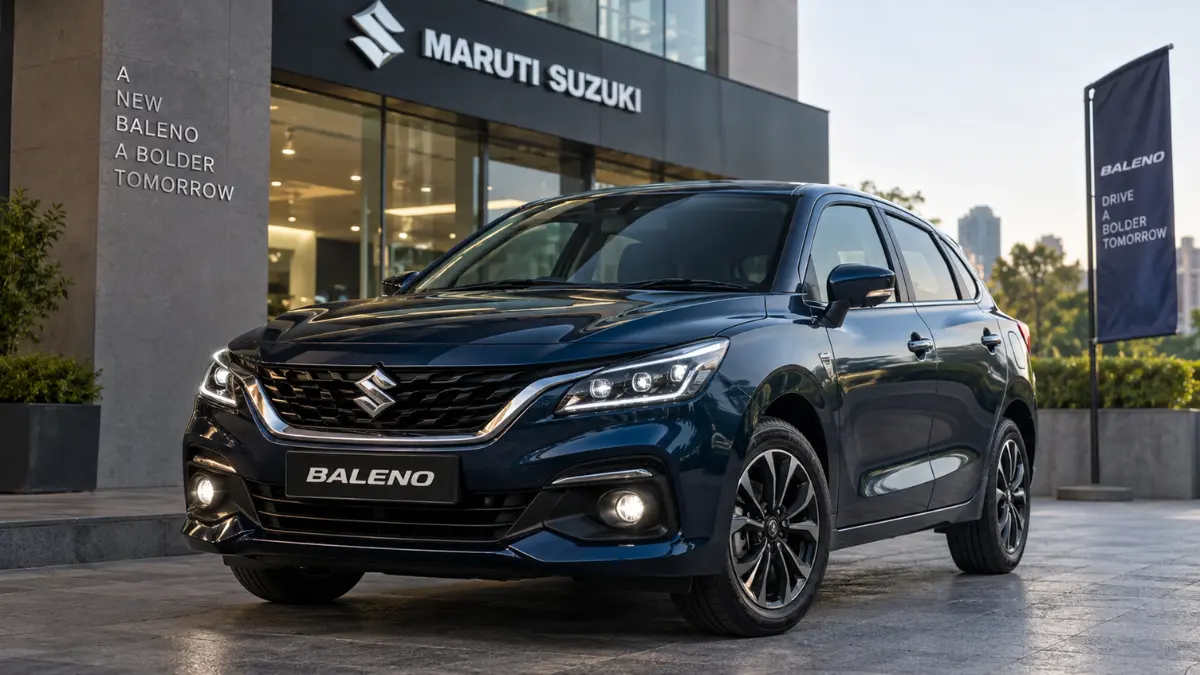
The New Maruti Baleno Facelift has officially launched today, September 5, 2026, and there is one big question hanging over this update: is this actually a better Baleno, or has Maruti taken away something that old-school Baleno fans loved?
At first glance, the facelift looks familiar. But underneath, Maruti Suzuki has made a surprisingly aggressive mechanical change that could completely alter how this premium hatchback feels on the road.
The Biggest Shock: Baleno Loses Its 4-Cylinder Engine
The biggest change is under the bonnet. Maruti has removed the older four-cylinder petrol engine and replaced it with the 1.2-litre, 3-cylinder Z Series petrol engine, the same engine family used in the Swift and Dzire.
It produces 80 bhp and 112 Nm, with buyers getting a 5-speed manual or 5-speed AMT.
Now, here is where things get interesting. The smaller three-cylinder setup should help Maruti push efficiency higher, which matters hugely to Indian buyers who spend plenty of time driving through traffic.
But I won’t pretend this is automatically good news for everyone.
A four-cylinder engine generally feels smoother and more refined, especially when you stretch its revs. Some existing Baleno owners may genuinely miss that relaxed, smoother character after moving to the new three-cylinder motor.
For a buyer obsessed with fuel bills, though, the trade-off could make perfect sense. Maruti is clearly betting that mileage matters more to the mass-market customer than engine refinement.
CNG-AMT Is the Real Headline
Then comes the update that could make Tata Altroz nervous: the Baleno now gets a factory-fitted S-CNG setup with an AMT automatic transmission.
That combination is a huge deal for Indian buyers.
Until now, choosing CNG often meant accepting a manual gearbox. The new setup attacks that compromise directly, giving buyers the possibility of CNG efficiency with automatic convenience.
Think about the daily reality. Stop-and-go traffic, crowded city roads and long commutes are exactly where an automatic gearbox makes life easier.
And if the fuel bill also stays low because of CNG, the Baleno starts looking like an extremely difficult car to ignore.
Also read: Kia Sorento Launched: Amazing Rs 27.99 Lakh Price
Premium Features Finally Catch Up
Maruti has also addressed one area where the Baleno needed a serious push: equipment.
The facelift introduces ventilated front seats, a feature that will be particularly welcome during India’s brutally hot summer months. This isn’t a gimmick for buyers who regularly park outside and spend hours behind the wheel.
The bigger talking point, however, is the addition of a new ADAS safety suite.
ADAS brings driver-assistance technology into the Baleno’s equipment list, moving the car closer to what buyers increasingly expect from premium hatchbacks.
The cabin also receives a new dual-tone interior theme and revised seat upholstery, giving the facelift a fresher feel without completely throwing away the Baleno’s familiar cabin identity.
Also read: Honda Elevate Gets MASSIVE Rs 1.79 Lakh Discount
The Exterior Gets a Sharper Face
Maruti hasn’t stopped with mechanical and cabin changes.
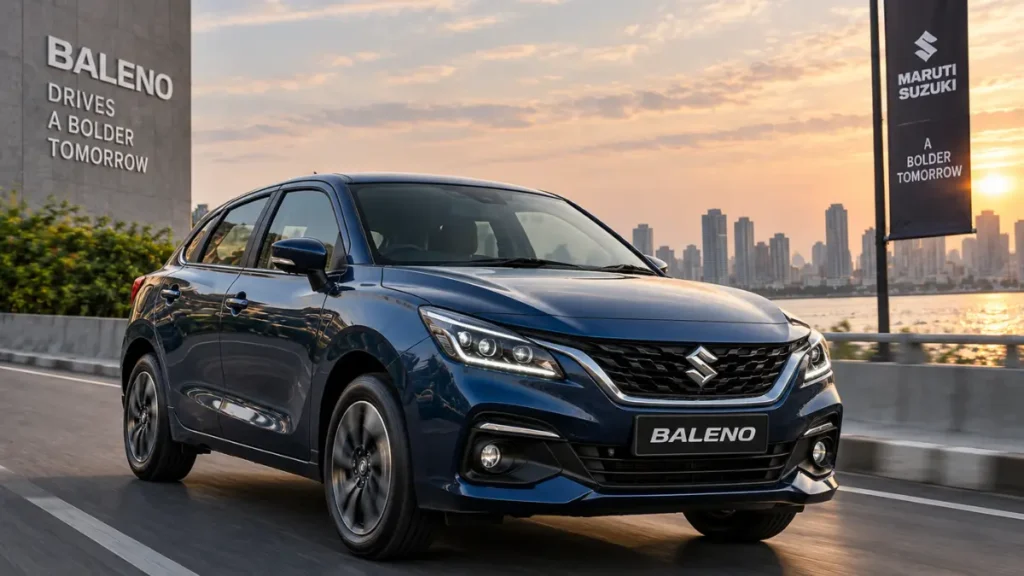
The front grille has been redesigned, while the front and rear bumpers have been updated to give the hatchback a more contemporary appearance.
There are also new alloy wheel designs, which should help the facelift look noticeably different from the outgoing car when it arrives on Indian roads.
It is not an outrageous redesign, and frankly, it didn’t need to be. The Baleno’s basic proportions are already clean and mature.
The smarter move was to make it look fresher without destroying its recognisable identity.
New Maruti Baleno Facelift: Key Specifications
| Variant Type | Engine | Key Feature Added | Transmission Options |
| Petrol | 1.2L 3-cylinder Z Series, 80 bhp / 112 Nm | ADAS, ventilated seats | 5-speed MT / 5-speed AMT |
| S-CNG | 1.2L Z Series | CNG + AMT, ADAS | Manual / AMT |
| Premium variants | 1.2L Z Series | Ventilated front seats, dual-tone cabin | MT / AMT |
My Brutal Verdict: Is It Actually Better?
In my opinion, the new Baleno is a smarter car, but not necessarily a more exciting one.
If your priority is pure driving performance, I would still look closely at the Hyundai i20. The new three-cylinder Baleno is clearly designed around efficiency and everyday usability rather than giving enthusiasts a reason to attack every corner.
But that is not what most Baleno buyers are actually asking for.
They want a comfortable hatchback, low running costs, useful technology, an automatic option and enough premium equipment to make the car feel expensive without becoming expensive to run.
That is exactly where the Maruti Baleno Facelift becomes seriously compelling.
The CNG-AMT combination could be the biggest weapon in its segment, while ADAS and ventilated seats give it a premium edge that older Baleno versions simply didn’t have.
Against the Tata Altroz, Hyundai i20 and Toyota Glanza, Maruti has not tried to win with one spectacular feature.
It has attacked the buyer’s entire checklist.
And yes, purists may complain about losing the four-cylinder smoothness. I understand that argument completely.
But for the average Indian buyer counting kilometres, fuel expenses and hours spent in traffic, this new Baleno may have just become a much harder car to beat.
Official source: Maruti Suzuki India — Check the latest official information, technology and model updates directly from Maruti Suzuki.